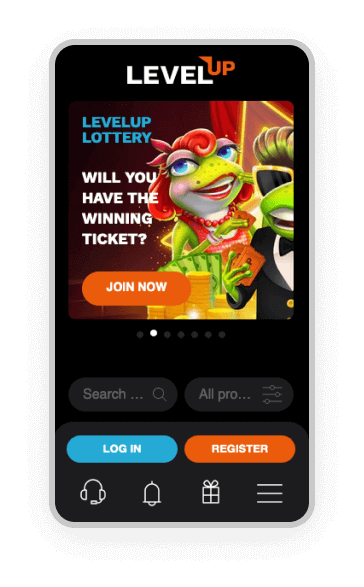
LevelUp Casino Mobile With LevelUp Casino App

A phone-first look at LevelUp Casino in Canada for 2026: setup, play flow, payments, limits, and help for legal-age users.

Fortune Gems 2 Slot

Table of Contents

  • The Dog House Megaways Slot
  • Lucky Joker 10 Extra Gifts Slot
  • Sword of Ares Slot
  • Floating Dragon Hold & Spin Slot
  • Leprechaun Riches Slot
  • Fruit Cocktail Slot
  • The Dog House Megaways Slot
  • Sword of Ares Slot
  • Fruit Million Slot
  • The Dog House Megaways Slot
  • Big Fisherman Slot
  • Big Fisherman Slot
  • Seven Books Unlimited Slot
  • LevelUp Casino Fortune Slot
  • Sword of Ares Slot
  • Floating Dragon Hold & Spin Slot
  • 9 Mad Hats Slot
  • Floating Dragon Hold & Spin Slot
  • Big Bass Splash Slot

Why LevelUp Casino Mobile Matters In Canada

Imagine you have ten quiet minutes, not an hour, and you still want a proper session that feels controlled. You unlock your phone, open the platform, and the first question hits: can you find the important stuff fast, or will you wander the lobby until your mood changes? That difference is what “mobile-ready” really means in 2026.

App 1

For Canada players, the practical goal is simple: access the account area quickly, understand your balance at a glance, and make decisions without hunting through menus. You are not looking for fireworks - you are looking for clarity. When navigation is clear, you can treat gambling like planned entertainment: a short session, a fixed budget, and a clean stop when you decide it is time.

There is also a second layer people notice only after a few sessions. On a phone, it is easier to tap impulsively, raise stakes too quickly, or chase a result because everything feels “right there.” The way you use limits, reminders, and break tools matters more on mobile than on desktop. If you build a simple routine early, you stop relying on willpower later.

application 2

LevelUp Casino App Setup On Your Device

Picture this: you want to play, but you do not want a messy device. You do not want pop-ups, random notifications, and extra permissions you never planned to grant. A clean setup is not about being technical - it is about staying focused when money is involved.

Start by deciding how you prefer to access the platform on a phone. Some players like a browser session because it is quick and does not clutter storage. Others prefer a dedicated application because it can feel faster and more consistent. Either way, treat the first setup like account maintenance, not like play time - do it when you are calm, not when you are chasing a quick break.

Once access is stable, run a simple test: sign in, open the cashier area, open your account settings, then sign out and return. That loop tells you if your device and session behavior feel predictable. If something feels “jumpy” (unexpected refreshes, forms that reset), fix it before you start a real session.

Choose Browser Or Native Install

Imagine you are on mobile data, your connection dips, and the page reloads right after you confirm a step. That is the moment when some players panic-click and repeat actions. To avoid that, pick the access method that stays steady on your device and your usual connection.

If you prefer a browser, use one you trust and keep it updated. Turn off clutter that interrupts forms (heavy ad blockers can break certain screens), and avoid running a dozen tabs in the background. If you prefer an application, keep it updated as well and close it fully after sessions so you do not leave an active session hanging.

A practical habit for 2026: keep one “gambling profile” on your phone. Use the same browser, the same settings, and the same security tools. When you change everything every time, you create little unknowns - and unknowns are where mistakes happen.

Permissions And Notifications Without Noise

Picture a normal day: your phone buzzes nonstop, and you are trying to make a clear decision in the middle of that noise. Notifications can be helpful for security alerts, but they can also pull your attention at the worst time. You want control, not constant interruptions.

Grant only what you understand. If a permission feels unrelated to account access or security, skip it until you have a reason. Then tune notifications: keep the ones that protect your account, mute the ones that push you into impulsive play. A small change here can make your sessions feel calmer immediately.

Also, set your own “friction.” If you know you tend to play late at night, decide that you will not gamble when you are half-asleep and reactive. Turn on a do-not-disturb window or use screen-time tools so the phone does not become a slot machine trigger you carry everywhere.

First Session Checklist Before You Tap Play

Imagine you deposit, win a little, and then realize you never set a cap and you have no plan for when to stop. Most players learn the hard way that a good first session is not about the result - it is about testing the process. You are checking whether the flow behaves the way you expect, on your device, with your habits.

App 3

Start with a small session by design. Choose a budget you can comfortably treat as entertainment, then make the session short enough that you stay sharp. On mobile, speed is the hidden risk: rounds happen fast, taps happen fast, and emotions can follow.

Do a quick pre-flight check before you open any game: confirm your balance display, find your transaction history, and locate where limits live. If you cannot find those areas in under a minute, pause and explore the menu until you can. You will thank yourself later.

Another adult move: decide your “stop signal.” It can be a timer, a fixed spend cap, or a simple rule like “one game only.” You are not trying to be heroic. You are trying to keep the session inside boundaries that feel comfortable.

Limits, Reminders, And Cooling-Off

Picture a session where you feel slightly annoyed and you start tapping faster to “fix” the mood. That is usually when stakes creep up and time stretches longer than planned. Limits and reminders exist to stop that slide before it becomes a problem.

Set a deposit cap and a time reminder before you start, not after you feel pulled in. If the platform offers a time-out option, treat it like a planned tool, not a last-resort punishment. A short break can reset your decision-making faster than any “strategy” can.

Keep limits simple. One or two strong boundaries you actually follow beat a complicated set of rules you forget the moment the session gets emotional. In 2026, responsible play is mostly routine: plan, play, stop, and move on with your day.

Payments And Withdrawals From A Phone

Imagine you confirm a deposit, the screen refreshes, and you are not sure if it went through. Your thumb hovers over the button again. That is the exact moment where mobile convenience can turn into a costly mistake, because repeating actions on a phone feels effortless.

Treat the cashier like a checklist, not like a vending machine. Before you fund, look for the confirmation step, the transaction record, and the status label that tells you what is happening. After you fund, verify once, then wait. “Wait” is not passive here - it is a deliberate step that prevents double actions.

Withdrawals require the same calm mindset, but with more patience. Payouts can involve method rules and account checks, and those steps can vary by player and by payment route. Your job is not to demand speed. Your job is to build a predictable routine: consistent details, consistent method, clean history.

A smart first withdrawal is a test run. Choose a modest amount, request the payout, and watch how status updates appear in your account history. Once you see the end-to-end flow on your device, you will feel more confident for bigger cashouts later.

Here is a practical mobile-focused table that shows what to check in the cashier flow, without relying on guesswork.

What to Check on Your Phone

Where It Usually Appears

Why it matters

The Common Mistake

Deposit Confirmation Screen

Right before final approval

Prevents accidental double funding

Tapping twice during slow loading

Transaction History Entry

Account or Cashier History

Confirms Money Movement Without Guessing

Looking Only at Game Balance

Status Label (Pending/Processed)

Next to a Transaction

Helps you know whether to wait or ask

Refreshing repeatedly and panicking

Withdrawal Method Consistency

Cashier payout section

Reduces questions during cashouts

Switching methods mid-session

Daily or Session Limits

Limits or Responsible Gaming Area

Helps keep spending aligned with a plan

Setting limits after emotions rise

Support Contact Options

Help Menu or Support Area

Speeds up problem-solving

Messaging without key details

Avoid Double Charges And Track Status

Picture a slow connection: you approve a payment, the spinner spins, and you assume it failed. Many players react by repeating the action, then later discover two transactions. The fix is boring but effective: check history first, then wait a short while, then check again.

Use one payment route consistently until you understand how it behaves on your account. Consistency helps you spot real issues because you are not changing variables every time. If you switch methods constantly, you never learn what “normal” looks like, and every small delay feels like a crisis.

If something truly looks wrong, collect details before you contact support: time, amount, method, and what the history shows. That one habit turns a vague complaint into a solvable ticket. On mobile, take notes in a safe place (not in a public chat) so you do not rely on memory.

Cashout Routine That Reduces Delays

Imagine you request a withdrawal right after you edited a profile detail, or right after you tried a new payment method for the first time. That combination often triggers extra checks, and it can feel like the platform is “stalling,” even when it is simply following normal safety steps.

Keep your cashout routine clean. Use the same payout route when possible, keep your profile details stable, and avoid making major changes right before a withdrawal. If you need to update something, do it on a calm day, confirm it is saved, then return to play later.

Also, avoid the refresh spiral. Track the request in history, note the status, and give it time. If the status does not change for longer than you expect, contact support with clear details. Calm persistence beats emotional pushing every time.


Games, Controls, And Bankroll Pace On Small Screens

Imagine you open a game on your phone and the buttons look slightly cramped. You try to lower the stake, but your thumb hits the wrong spot, and suddenly you are betting more than planned. Small-screen play can be great, but only if you slow down and make the controls feel familiar.

Start by choosing games that are readable on your device. You want clear bet controls, a visible balance, and an easy way to open game information. If a game feels visually busy, do not force it. Pick a different one. You are not auditioning for patience - you are trying to enjoy a controlled session.

Bankroll pacing matters more on a phone because rounds can fly by. Decide whether you want a short “coffee break” session or a longer evening session, then set stakes and speed to match. A lower stake with a steadier pace often delivers more entertainment time, which is the point.

Picking Games When You Have Ten Minutes

Picture yourself waiting in line or sitting in a taxi. You want a quick session, not a marathon. The best choice in that moment is a game you already understand, with simple rules and predictable controls.

Use favorites if available so you are not browsing endlessly. Browsing is where impulsive decisions grow, because you keep chasing the next option instead of settling into one plan. Choose one game, play a short block, then stop. That routine keeps mobile play from turning into constant scrolling.

Also, check the information panel before you commit. If you cannot find rules and features quickly, that is a sign the game may not be the best fit for a quick mobile session.

Controlling Stakes And Autoplay Habits

Imagine you hit a small win early, feel excited, and raise the stake too fast because it feels like momentum. That pattern is classic, and it is not “strategy.” It is emotion. On mobile, the friction is low, so the decision happens in a second.

Start lower than you think you need, then adjust slowly. If autoplay exists, treat it carefully. Autoplay can detach you from your own spending pace, especially on a phone where you might glance away for a second and miss what happened.

A practical trick: decide your stake changes in advance. For example, “I only adjust after a set time block,” not “I adjust whenever I feel like it.” Small rules like this stop the session from being driven by mood.

Using History And Reality Checks Mid-Session

Picture a session where you feel like you are up, but you are not sure. Mobile play can make your sense of time and money fuzzy. A quick reality check fixes that: open the account history and look at what actually happened.

Do not use history as a scoreboard. Use it as a grounding tool. If you notice you are chasing, take a break. If you notice you are winning and you feel tempted to push harder, pause and decide whether you want to lock in the result by stopping.

In 2026, the most “advanced” mobile skill is not a betting trick. It is knowing when to stop while you still feel clear.

Support, Security, And Account Recovery

Imagine you are mid-session and something looks off: a payment status is unclear, or a setting did not save. The worst move is to fire off a vague message and hope someone reads your mind. The best move is to slow down, gather details, and communicate once, clearly.

Support works best when you treat it like a problem-solving process. Check your history, note what you did, and describe what you expected. Then ask one focused question. When the platform can locate your case quickly, you waste less time and you feel less stress.

Security on mobile is mostly habits. Avoid shared devices, avoid saving passwords where other people can access them, and sign out when you are done. Convenience feels nice until the day it creates a risk. Build small routines now so you do not need big fixes later.

Writing A Support Message That Gets Action

Picture an agent looking at hundreds of tickets. “It doesn’t work” forces them to ask five follow-up questions. A clear message saves both sides time. Include what you did, what you expected, what you saw, and what device you used.

Keep your tone neutral and your details specific. Add the time and amount for payment issues, and refer to what your account history shows. Then wait for the response instead of sending multiple messages that contradict each other. Consistency is what speeds up resolution.

If you are asked to confirm identity or account ownership, follow the steps carefully and finish them in one focused attempt. Half-complete attempts create confusion, and confusion leads to delays.

Device Safety On Shared Wi-Fi

Imagine you sign in on public Wi-Fi, your session stays open, and your phone auto-fills details next time without you noticing. Small convenience features can turn into real risk if you do not manage them.

Use private browsing when needed, do not save credentials on shared devices, and end sessions deliberately. If you must play on public Wi-Fi, avoid doing sensitive account changes in that moment. Keep sensitive actions for a stable, trusted connection, and keep casual play separate from account maintenance.

Also, protect your phone itself. A screen lock, secure email access, and a clean recovery method matter because your account security often depends on your device security. In 2026, “account safety” is mostly “phone safety.”

FAQ

Use a timer and a simple stop rule before you start, not after you feel pulled in. Imagine you planned a quick break, then one more round turns into forty minutes because it is easy to keep tapping on a phone. Set a time reminder, keep stakes steady, and stop when the reminder hits, even if you feel tempted to continue. If you regularly ignore reminders, add a cooling-off window so the decision is not left to mood.

Confirm you can see transaction history, find the cashier, and locate your limits area first. Picture the common mistake: someone deposits, the page refreshes, and they cannot tell what happened, so they repeat the action. A quick check of history and status labels prevents double funding. Start small, verify once, then move to play only when the record looks clear.

Payouts can involve method rules and account checks, and those steps can vary by player and by payment method. Imagine you request a cashout right after changing profile details, then wonder why extra confirmation appears - that is a normal safety pattern. Keep your details consistent, use the same payout method when possible, and avoid last-minute edits before requesting a withdrawal. Track status in history instead of refreshing constantly, and contact support with clear details if the status does not change.

Slow down and treat the first minute as a controls check, not a gambling test. Picture your thumb hitting the wrong button because the interface feels cramped, then realizing you bet more than planned. Start with a low stake, find where the bet controls sit, and confirm the amount before each new block of spins. If a game feels too busy on your phone, switch to a more readable option instead of forcing it.

Do not spam attempts or guess repeatedly until you trigger a lock. Imagine you are tired and you keep typing variations, then suddenly you cannot access the account when you actually need it. Use the recovery flow once, carefully, and make sure you still control the email and phone tied to the account. After you regain access, use a strong unique password and sign out on any devices you do not fully control.

Use it when the session stops feeling like entertainment and starts feeling like pressure. Imagine you are chasing losses, speeding up decisions, and telling yourself you will stop “after one win” - that is a warning sign. A time-out creates space to reset your head, and self-exclusion creates a stronger boundary if patterns repeat. These tools are not about guilt, they are about keeping gambling within adult limits you can live with.

Send one clear message that includes what you did, what you expected, what happened, and what your history shows. Picture an agent trying to solve your issue with only “it failed” as input - they will need follow-up questions and you will wait longer. Include the time, amount, and method for payment issues, and mention your device type. Then respond calmly to follow-ups and avoid sending multiple conflicting messages, because consistency speeds up resolution.

🇬🇧 English